
Cassava starch is a widely available, biodegradable raw material with strong potential for bio-adhesive production. However, its native form often exhibits weak bonding strength, limited structural stability, and high susceptibility to moisture. This study compares the structural, functional, and environmental performance of native and chemically modified cassava starch adhesives. Chemical modification was applied to enhance crystallinity, durability, and bonding capacity. X-ray diffraction (XRD) analysis revealed an increase in structural ordering, with the modified starch displaying sharper and more intense peaks than the broad, weak peaks of the native sample, confirming improved crystallinity. Biodegradation testing under soil burial conditions showed that both adhesives were biodegradable, but the modified adhesive degraded more slowly, losing 52% of its mass after 30 days compared with 78% for the native adhesive. This demonstrates an effective balance between stability and environmental friendliness. The modified adhesive also presented superior viscosity, cohesion, and resistance to moisture-induced weakening, suggesting its suitability for packaging, woodworking, and eco-construction applications. Overall, the findings indicate that chemical modification significantly improves cassava starch adhesive performance while maintaining biodegradability. Further research is recommended to explore advanced modification techniques, incorporate reinforcing additives, and conduct large-scale production assessments to fully realize the potential of modified cassava starch as a sustainable alternative to synthetic adhesives.
| Published in | Science Discovery Plants (Volume 1, Issue 1) |
| DOI | 10.11648/j.sdplants.20260101.14 |
| Page(s) | 33-41 |
| Creative Commons |
This is an Open Access article, distributed under the terms of the Creative Commons Attribution 4.0 International License (http://creativecommons.org/licenses/by/4.0/), which permits unrestricted use, distribution and reproduction in any medium or format, provided the original work is properly cited. |
| Copyright |
Copyright © The Author(s), 2026. Published by Science Publishing Group |
Cassava Starch, Chemical Modification, Bio-adhesive, Biodegradability, Sustainable Materials
Property | Native Cassava Starch | Modified Cassava Starch |
|---|---|---|
Moisture Content (%) | 11.2 | – |
pH | 6.8 | 7.2 |
Viscosity (cP) | 450 | 980 |
Gelatinization Temperature (°C) | 64 | 72 |
Property | Native Adhesive | Modified Adhesive |
|---|---|---|
Major peaks | 15°, 17°, 18°, 23° | Broad peak around 20°–22° |
Peak intensity | High | Low |
Crystallinity Index | 28.6% | 12.4% |
Structure | Semi-crystalline | Mostly amorphous |
FT-IR | Fourier Transform Infrared Spectroscopy |
MF | Melamine-formaldehyde |
pH | Potential of Hydrogen |
PF | Phenol-formaldehyde |
PMDI | Polymeric Methylene Diphenyl Diisocyanate |
XRD | X- Ray Diffraction |
UF | Urea-formaldehyde |
| [1] | Admase, A. T., Mersha, D. A., & Kebede, A. Y. (2024). Cassava starch-based hot melt adhesive for textile industries. Scientific Reports, 14(1), 20927. |
| [2] | Arias, A., González-Rodríguez, S., Vetroni Barros, M., Salvador, R., de Francisco, A. C., Moro Piekarski, C., & Moreira, M. T. (2021). Recent developments in bio-based adhesives from renewable natural resources. Journal of Cleaner Production, 314, 127892. |
| [3] | Dolas, K. A., Ranveer, R. C., Tapre, A. R., Nandane, A. S., & Sahoo, A. K. (2020). Effect of starch modification on physico-chemical, functional and structural characterization of cassava starch (Manihot esculenta Crantz). Food Research, 4(4), 1265-1271. |
| [4] | Gebremedhine, M. G., Tekle, S. G., Terfie, T. A., & Aragaw, T. A. (2025). Occurrence of microplastics in water and sediment of a highly urbanized lake ecosystem in Addis Ababa, Ethiopia. Journal of Hazardous Materials Advances, 18(May), 100756. |
| [5] | Jarensungnen, C., Jetsrisuparb, K., Phanthanawiboon, S., Theerakulpisut, S., Hiziroglu, S., Knijnenburg, J. T. N., Okhawilai, M., & Kasemsiri, P. (2023). Development of eco-friendly antifungal and antibacterial adhesive derived from modified cassava starch waste/polyvinyl alcohol containing green synthesized nano-silver. Scientific Reports, 13(1), 13355. |
| [6] | Khadsai, S., Janmanee, R., Sam-Ang, P., Nuanchawee, Y., Rakitikul, W., Mankhong, W., Likittrakulwong, W., & Ninjiaranai, P. (2024). Influence of Crosslinking Concentration on the Properties of Biodegradable Modified Cassava Starch-Based Films for Packaging Applications. Polymers, 16(12), 1647. |
| [7] | Liang, Z., Xue, J., Yan, Q., Sun, Y., Luo, S., Zhu, Y., & Zhang, S. (2025). Advanced Dual-Cross-Linking Strategy for Upgrading Formaldehyde-Free Olefin Adhesives. Nano Letters, 25(7), 2931-2938. |
| [8] | Liu, J., Fang, J., Xie, E., & Gan, W. (2022). Relevance between Cassava Starch Liquefied by Phenol and Modification of Phenol-Formaldehyde Resin Wood Adhesive. Polymers, 14(9), 1914. |
| [9] | Magalhães, S., Alves, L., Medronho, B., Fonseca, A. C., Romano, A., Coelho, J. F. J., & Norgren, M. (2019). Brief Overview on Bio-Based Adhesives and Sealants. Polymers, 11(10), 1685. |
| [10] | Monroy, Y., Cabezas, D. M., Rivero, S., & García, M. A. (2023). Structural analysis and adhesive capacity of cassava starch modified with NaOH: urea mixtures. International Journal of Adhesion and Adhesives, 126, 103470. |
| [11] | Monroy, Y., Hamet, M. F., Rivero, S., & García, M. A. (2023). Tailor-made starch-based adhesives chemically modified with NaOH: urea and their applications on a cellulosic substrate. International Journal of Biological Macromolecules, 247, 125423. |
| [12] | Monroy, Y., Rivero, S., & García, M. A. (2023). Liquid and Pressure-Sensitive Adhesives Based on Cassava Starch and Gelatin Capsule Residue: Green Alternatives for the Packaging Industry. Foods, 12(21), 3982. |
| [13] | Olomo, V. D. (2022). Influence of Processing Variables on Some Physico-Chemical Properties and Quality of Manioc Starch-Based Adhesives. Open Journal of Polymer Chemistry, 12(01), 1-12. |
| [14] | Palavecino, P. M., Penci, M. C., & Ribotta, P. D. (2019). Impact of chemical modifications in pilot-scale isolated sorghum starch and commercial cassava starch. International Journal of Biological Macromolecules, 135, 521-529. |
| [15] | Pepi, J. W. (2018). Adhesives. In Opto-structural Analysis. SPIE. |
| [16] | Poulis, J. A., Mosleh, Y., Cansell, E., Cimino, D., Ploeger, R., René de la Rie, E., McGlinchey, C. W., & Seymour, K. (2022). Mechanical and physical characterization of natural and synthetic consolidants. International Journal of Adhesion and Adhesives, 117, 103015. |
| [17] | Rahaman, A., Kumari, A., Zeng, X.-A., Adil Farooq, M., Siddique, R., Khalifa, I., Siddeeg, A., Ali, M., & Faisal Manzoor, M. (2021). Ultrasound based modification and structural-functional analysis of corn and cassava starch. Ultrasonics Sonochemistry, 80, 105795. |
| [18] | Ramos, G. V. C., Rabelo, M. E. A., Pinho, S. C. de, Valencia, G. A., Sobral, P. J. do A., & Moraes, I. C. F. (2024). Dual Modification of Cassava Starch Using Physical Treatments for Production of Pickering Stabilizers. Foods, 13(2), 327. |
| [19] | Reotutar, A. M. R., Mamuad, R. Y., & Choi, A. E. S. (2024). Production of Chemically Modified Bio-Based Wood Adhesive from Camote and Cassava Peels. Polymers, 16(4), 523. |
| [20] | S. Sivamani, & T. Raja. (2023). Preparation of Adhesive from Cassava Starch and Evaluation of its Physicochemical Properties. Sustainable Chemical Engineering, 40-45. |
| [21] | Sullivan, K., & Peterman, K. D. (2024). A review of adhesive steel-to-steel connections for use in heavy construction. Journal of Constructional Steel Research, 213, 108405. |
| [22] | Van Giau, V., Kien, T. T., Van Thanh, T., Hieu, T. T., Thao, N. T. P., Son, L. T., Schnitzer, H., Le Luu, T., & Hai, L. T. (2024). The role of specific energy consumption in a heat recovery system for cassava starch production using an integrated agro-industrial system. Energy, Sustainability and Society, 14(1), 43. |
| [23] | Watcharakitti, J., Nimnuan, J., Krusong, K., Nanan, S., & Smith, S. M. (2023). Insight into the Molecular Weight of Hydrophobic Starch Laurate-Based Adhesives for Paper. Polymers, 15(7), 1754. |
| [24] | Wongphan, P., Nerin, C., & Harnkarnsujarit, N. (2024). Modifying Cassava Starch via Extrusion with Phosphate, Erythorbate and Nitrite: Phosphorylation, Hydrolysis and Plasticization. Polymers, 16(19), 2787. |
| [25] | Yu, H., Xia, Y., Liu, X., Chen, H., Jin, Z., & Wang, Z. (2024). Preparation of reed fibers reinforced graft-modified starch-based adhesives based on quantum mechanical simulation and molecular dynamics simulation. International Journal of Biological Macromolecules, 262, 129802. |
| [26] | Zain, A. H. M., Ab Wahab, M. K., & Ismail, H. (2018). Biodegradation Behaviour of Thermoplastic Starch: The Roles of Carboxylic Acids on Cassava Starch. Journal of Polymers and the Environment, 26(2), 691-700. |
| [27] | Zhang, Y., Guo, Z., Chen, X., Ma, Y., & Tan, H. (2021). Synthesis of Grafting Itaconic Acid to Starch-Based Wood Adhesive for Curing at Room Temperature. Journal of Polymers and the Environment, 29(3), 685-693. |
APA Style
Geda, S. D., Ayanu, S. R., Tuya, G. T. (2026). Synthesis and Production of Chemically Modified Bio-Based Adhesive from Cassava Root for Sustainable Industrial Applications. Science Discovery Plants, 1(1), 33-41. https://doi.org/10.11648/j.sdplants.20260101.14
ACS Style
Geda, S. D.; Ayanu, S. R.; Tuya, G. T. Synthesis and Production of Chemically Modified Bio-Based Adhesive from Cassava Root for Sustainable Industrial Applications. Sci. Discov. Plants 2026, 1(1), 33-41. doi: 10.11648/j.sdplants.20260101.14
AMA Style
Geda SD, Ayanu SR, Tuya GT. Synthesis and Production of Chemically Modified Bio-Based Adhesive from Cassava Root for Sustainable Industrial Applications. Sci Discov Plants. 2026;1(1):33-41. doi: 10.11648/j.sdplants.20260101.14
@article{10.11648/j.sdplants.20260101.14,
  author = {Sisay Demissie Geda and Shasho Regasa Ayanu and Gemeda Tesso Tuya},
  title = {Synthesis and Production of Chemically Modified Bio-Based Adhesive from Cassava Root for Sustainable Industrial Applications},
  journal = {Science Discovery Plants},
  volume = {1},
  number = {1},
  pages = {33-41},
  doi = {10.11648/j.sdplants.20260101.14},
  url = {https://doi.org/10.11648/j.sdplants.20260101.14},
  eprint = {https://article.sciencepublishinggroup.com/pdf/10.11648.j.sdplants.20260101.14},
  abstract = {Cassava starch is a widely available, biodegradable raw material with strong potential for bio-adhesive production. However, its native form often exhibits weak bonding strength, limited structural stability, and high susceptibility to moisture. This study compares the structural, functional, and environmental performance of native and chemically modified cassava starch adhesives. Chemical modification was applied to enhance crystallinity, durability, and bonding capacity. X-ray diffraction (XRD) analysis revealed an increase in structural ordering, with the modified starch displaying sharper and more intense peaks than the broad, weak peaks of the native sample, confirming improved crystallinity. Biodegradation testing under soil burial conditions showed that both adhesives were biodegradable, but the modified adhesive degraded more slowly, losing 52% of its mass after 30 days compared with 78% for the native adhesive. This demonstrates an effective balance between stability and environmental friendliness. The modified adhesive also presented superior viscosity, cohesion, and resistance to moisture-induced weakening, suggesting its suitability for packaging, woodworking, and eco-construction applications. Overall, the findings indicate that chemical modification significantly improves cassava starch adhesive performance while maintaining biodegradability. Further research is recommended to explore advanced modification techniques, incorporate reinforcing additives, and conduct large-scale production assessments to fully realize the potential of modified cassava starch as a sustainable alternative to synthetic adhesives.},
 year = {2026}
}
TY  - JOUR
T1  - Synthesis and Production of Chemically Modified Bio-Based Adhesive from Cassava Root for Sustainable Industrial Applications
AU  - Sisay Demissie Geda
AU  - Shasho Regasa Ayanu
AU  - Gemeda Tesso Tuya
Y1  - 2026/02/27
PY  - 2026
N1  - https://doi.org/10.11648/j.sdplants.20260101.14
DO  - 10.11648/j.sdplants.20260101.14
T2  - Science Discovery Plants
JF  - Science Discovery Plants
JO  - Science Discovery Plants
SP  - 33
EP  - 41
PB  - Science Publishing Group
UR  - https://doi.org/10.11648/j.sdplants.20260101.14
AB  - Cassava starch is a widely available, biodegradable raw material with strong potential for bio-adhesive production. However, its native form often exhibits weak bonding strength, limited structural stability, and high susceptibility to moisture. This study compares the structural, functional, and environmental performance of native and chemically modified cassava starch adhesives. Chemical modification was applied to enhance crystallinity, durability, and bonding capacity. X-ray diffraction (XRD) analysis revealed an increase in structural ordering, with the modified starch displaying sharper and more intense peaks than the broad, weak peaks of the native sample, confirming improved crystallinity. Biodegradation testing under soil burial conditions showed that both adhesives were biodegradable, but the modified adhesive degraded more slowly, losing 52% of its mass after 30 days compared with 78% for the native adhesive. This demonstrates an effective balance between stability and environmental friendliness. The modified adhesive also presented superior viscosity, cohesion, and resistance to moisture-induced weakening, suggesting its suitability for packaging, woodworking, and eco-construction applications. Overall, the findings indicate that chemical modification significantly improves cassava starch adhesive performance while maintaining biodegradability. Further research is recommended to explore advanced modification techniques, incorporate reinforcing additives, and conduct large-scale production assessments to fully realize the potential of modified cassava starch as a sustainable alternative to synthetic adhesives.
VL  - 1
IS  - 1
ER  -
Chemical and Construction Inputs Industry Research Development Center, Manufacturing Industry Development Institute, Addis Ababa, Ethiopia
Chemical and Construction Inputs Industry Research Development Center, Manufacturing Industry Development Institute, Addis Ababa, Ethiopia
Chemical and Construction Inputs Industry Research Development Center, Manufacturing Industry Development Institute, Addis Ababa, Ethiopia
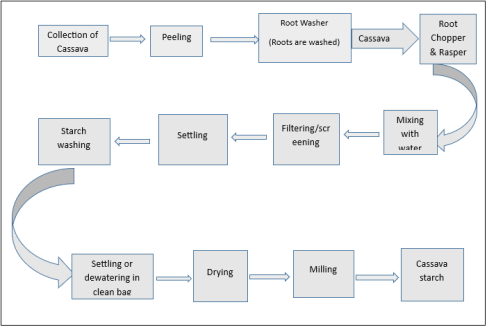
Figure 1. Schematic Presentation of Cassava Starch Sample Preparation.
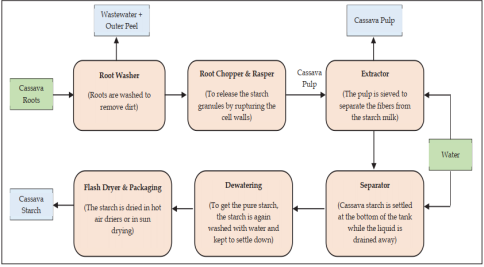
Figure 2. Preparation of Bio-based adhesive from cassava starch.
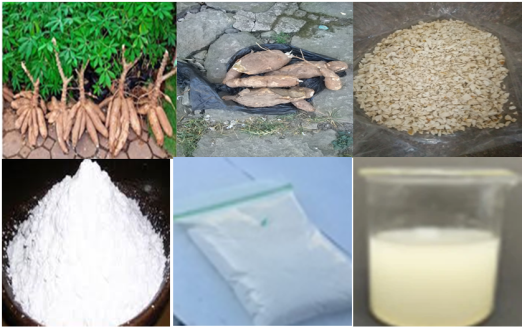
Figure 3. Cassava Root to Bio-Based adhesive.
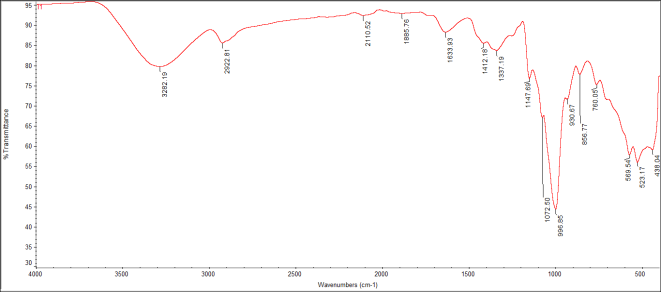
Figure 4. FTIR Spectrum of Modified Cassava Starch.
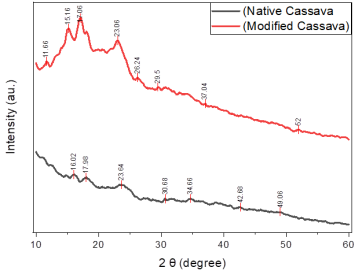
Figure 5. XRD Diffraction of Native and Chemically Modified Starch.




 Share This Article
 Twitter
 Linked In
 Facebook
 Copy
Copy Download